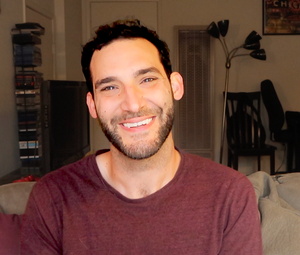
Andy Acosta Found His Voice, Then Found His Way Home
For years, Andy Acosta lived the kind of career many opera singers spend their entire lives chasing.
The Cuban-American tenor performed across Europe, earned a contract with the Metropolitan Opera, joined prestigious young artist programs, and spent most of the year traveling from one production to the next. Before turning 30, he had already built a résumé that placed him among the most promising voices in his field.
Then the pandemic forced him to stop.
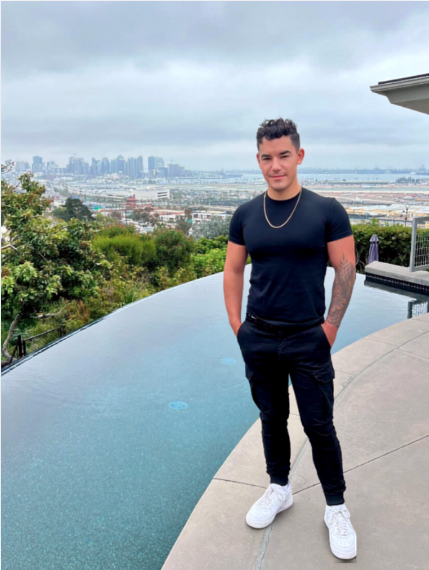
For the first time in his adult life, Acosta had to stay in one place. That place happened to be San Diego.
Credit: @theandyacosta
What began as a temporary visit to help his brother recover from a serious back injury quickly became something much more permanent.
“I was like, ‘Oh, shit. I’ve lived everywhere. San Diego is an incredible city,’” Acosta says. “It very quickly became my favorite city in the U.S.”
As opera performances gradually returned, Acosta found himself leaving San Diego for rehearsals and productions around the country. Each time he left, however, the excitement of another role was tempered by the same realization.
“Every single time I was away, I was like, ‘Wow, I miss home so much. I just want to be in San Diego,’” he says. “It always felt like I was leaving a big part of my heart at home.”
For someone whose career had been built around constant movement, discovering a place that felt like home would ultimately change everything.
Finding His Voice
Acosta grew up in Miami as a first-generation American in a Cuban family where neither singing nor opera were part of the family tradition.
Performing, however, appeared to be part of him from the beginning.
“There are literally videos of me singing Selena and some Britney when I was like four years old,” he says. “Singing and sort of being a performer was always part of who I was.”
The first major turning point came in middle school, when his chorus teacher, a retired opera singer, recognized something special in his voice.
“He approached me and was like, ‘Hey, I think you have a really big talent for singing. I would love to give you free voice lessons if your parents would allow it,’” Acosta says.
His parents agreed, and those lessons became the beginning of both his formal training and his confidence as a performer.
Music also gave Acosta a place to explore parts of himself that he did not yet know how to express directly.
“For me, it was just a really awesome space to be able to explore who I was,” he says. “Obviously, now, as an openly gay man, a lot of what I was exploring at that time was also just my queerness and how I could be a little bit more of myself without necessarily having to put my own words to it.”
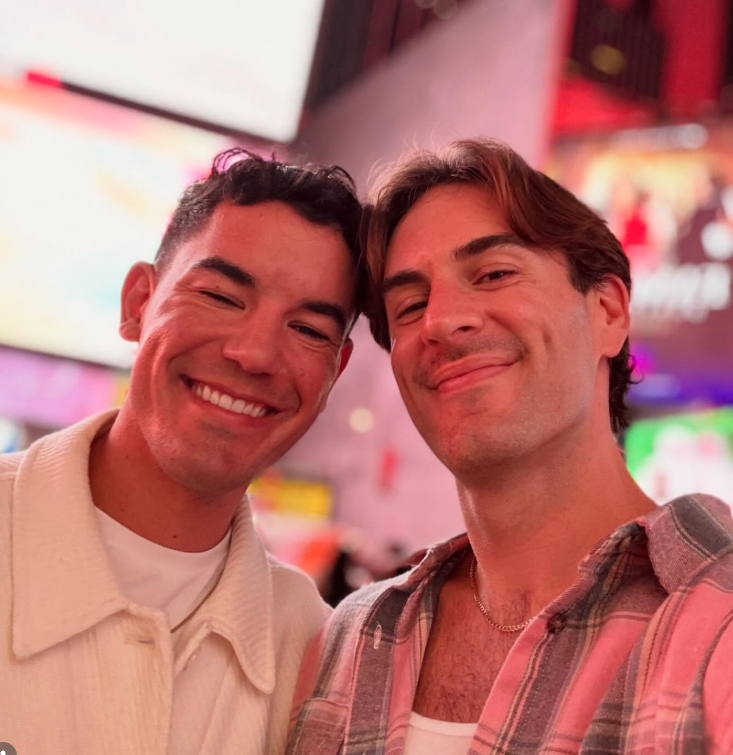
Andy Acosta and husband, Josh. Credit: @theandyacosta
Acosta attended a performing arts high school and appeared on Spanish-language television competitions as a teenager, including a show on Telemundo that he won at 14. Yet his growing success as a singer existed alongside a more difficult personal journey.
“I had a not-so-great coming out,” he says. “I was looking for an opportunity to get away from home and find more of myself. I wanted to be able to be away. I wanted to be able to not be forced back into the closet.”
His voice became more than an artistic gift. It became, as he describes it, “literal currency.”
Acosta received a full scholarship to Florida State University, where he began performing major roles while still an undergraduate. He later received another full ride to Indiana University’s Jacobs School of Music, one of the country’s most respected opera programs.
Indiana was also where he met his husband, Josh, whose support would become essential during the years of constant travel that followed.
A Career Built Around Leaving
The life of a working opera singer often involves moving from city to city, joining a cast for several weeks, performing, and leaving again almost immediately.
“We’re traveling four to six weeks, gig to gig, 11 months out of the year,” Acosta says. “It was a lot of commitment to travel, a lot of living out of a hotel room.”
The work was demanding, but Acosta loved the collaborative nature of it.
“I got to do the thing that I loved, which is be around amazing people, create community in this room, and sort of lift each other up in a very high-stakes situation,” he says.
Opera, he explains, requires physical conditioning, emotional discipline, language skills, and complete trust between performers.
“There are thousands of people out in the audience, and we’re trusting each other to be able to tell this story that is often in either French, German, or Italian,” he says. “There are no microphones. It is literally like a wild, big sport. It’s an Olympic sport for sure, and our bodies are the instrument.”
Acosta’s career took him to major opera houses throughout the United States and Europe. Yet when the pandemic interrupted that momentum, San Diego gave him something the constant travel never had.
“I had never really felt a true sense of community anywhere,” he says. “Everyone here is just so approachable and so interested in what other people have to offer and share, but not necessarily what their status is.”

Credit: @theandyacosta
By 2021, while preparing to perform one of the largest roles in his repertoire at a major opera house in Seattle, Acosta began taking a real estate course.
“I needed to make a change, because I didn’t want to have to be away from home all the time,” he says.
His transition into real estate did not mean abandoning opera. Instead, it allowed him to redefine the place performance would have in his life.
He now sees parallels between the two careers. In both, people are navigating high-pressure environments and being asked to place their trust in someone else.
“I’m saying, ‘Hey, trust me. I’m going to be of service to you. I know this business in and out. I know these contracts in and out,’” he says. “We have this event together, and then we’re friends at the end. That’s so much of what theater is.”
The Role That Asked Him to Heal
Few roles have followed Acosta as closely as Timothy Laughlin in San Diego Opera’s production of Fellow Travelers.
Based on Thomas Mallon’s novel, the opera follows a young Catholic man who becomes involved in a secret relationship with a State Department official during the Lavender Scare, when suspected queer government employees were investigated, fired, and publicly persecuted.
Acosta first encountered the score before the opera premiered. At the time, he was a young artist with Minnesota Opera preparing for his first major professional opportunity.
He was warned that the role would be vocally and dramatically demanding. It would also require a level of personal vulnerability he had not previously confronted onstage.
When he read through the score, however, the emotional connection was immediate.
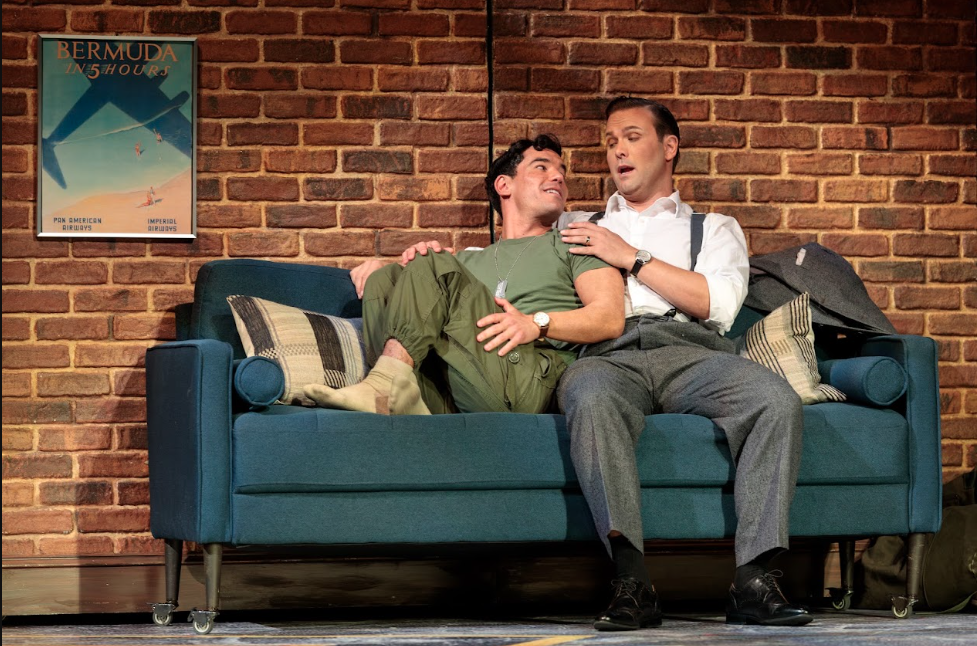
Credit: Karli Cadel
“The challenge of it is that you have this character who struggles with what I would consider the most universal thing that all queer folks struggle with,” Acosta says. “How does this thing that feels so right, how does this thing that feels so natural to me, become the thing that is wrong?”
Timothy’s struggle between his sexuality and his Catholic faith resonated deeply with Acosta’s own history.
“You felt this extreme passion and beauty and love, and now I feel like absolute shit because of it,” he says. “That’s so universal, I think, to any queer person who finds themselves and then struggles with, ‘What do I identify as now, and how does that change me?’”
Taking on the role meant confronting emotional wounds he had carried for years.
“If I do this piece, I have to deal with that part of me that I had not yet dealt with,” he says. “To me, it was the ultimate journey to be able to heal that inner part of myself.”
Acosta has returned to Timothy repeatedly over nearly a decade. Each time, the role has changed because he has changed.
“There’s just a beauty to being able to have a role that evolves with you as a human being,” he says. “We don’t get that opportunity often in theater, in opera, in live performance. I’m just so grateful to my courage 10 years ago when I said yes.”
Choosing Community
Performing Fellow Travelers in San Diego brought Acosta’s personal and professional lives together in a way he once could not have imagined.
“It really does feel like my dream come true,” he says.
After years of performing for audiences around the world, Acosta was able to share one of his most meaningful roles with the clients, friends, and chosen family who now define his life.
“This just feels like the absolute mixture of both,” he says. “I get to do it for so many clients, for so many people in the community and friends, for the family that I now have here, and a true sense of chosen family.”
He also hopes the story remains accessible to people who may feel intimidated by opera. Sung in English and paced with cinematic scene changes, Fellow Travelers places storytelling above tradition or spectacle.
“It is not trying to be something, but rather it is trying to tell the most honest story possible,” Acosta says.
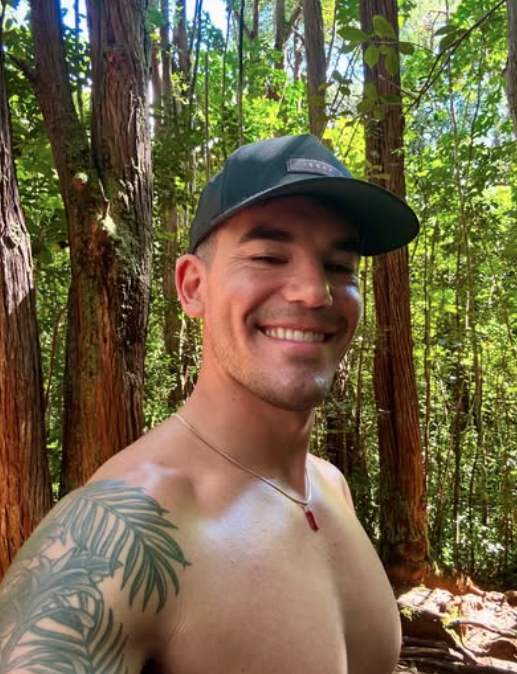
Credit: @theandyacosta
Today, Acosta continues to balance real estate with opera while serving and supporting San Diego’s artistic and LGBTQ+ communities. He sits on the board of Diversionary Theatre and hopes to deepen his involvement with institutions including San Diego Opera, The Old Globe, and the San Diego Symphony.
After building a career around leaving, he has chosen to remain.
“San Diego is my forever home,” Acosta says. “I want to be involved in as much community as I can.”
He welcomes anyone working on queer or arts-related projects to reach out, not because he is looking for another title, but because he wants to contribute to the city that finally gave him a place to belong.
“I truly mean it,” he says. “I just want to be able to continue to lift up our community.”